
loyalty
loyalty
12 May 2025 • 6 min read
12 May 2025 • 6 min read
Bank Future Dining With Brandollars: Turn One-Time Diners Into Loyal Regulars
Bank Future Dining With Brandollars: Turn One-Time Diners Into Loyal Regulars
Bank Future Dining With Brandollars: Turn One-Time Diners Into Loyal Regulars
Brandollars turn occasional diners into loyal regulars. Learn best practices for tiered rewards, bonus strategies, and why 80% of guests come back to redeem.
Brandollars turn occasional diners into loyal regulars. Learn best practices for tiered rewards, bonus strategies, and why 80% of guests come back to redeem.
Written by

Nomni
The ultimate hospo solution
Venues face a persistent challenge: converting occasional diners into consistent, high-value regulars. Traditional loyalty programs often fall short. They focus on discounting current purchases or rewarding past behaviour rather than influencing and securing future spending.
Leading operators address this by using branded currency programs that allow guests to bank future dining intent.
Brandollars: Using the Power of Prepaid Loyalty
Unlike conventional loyalty programs that reward past behaviour, branded currency, known as Brandollars, shifts the focus to future commitment and engagement.
Brandollars are venue-specific digital currency that customers purchase and redeem exclusively on your menu. Venues can create purchase tiers such as $20, $50 or $100 and attach a bonus value or percentage to each tier. Customers receive additional credit for purchasing upfront, increasing the likelihood of return visits.
For example, if a customer plans to spend $15 but receives a $5 bonus when purchasing $20 in Brandollars, the added value encourages the higher upfront spend. The bonus credit creates a reason to return and redeem.
"It's not just rewarding spend—it's banking future intent," explains Andy Lark, CRO, Nomni. "When customers invest in your branded currency, they've already committed to coming back."
Why Tiered Rewards Drive Loyalty and Revenue Growth
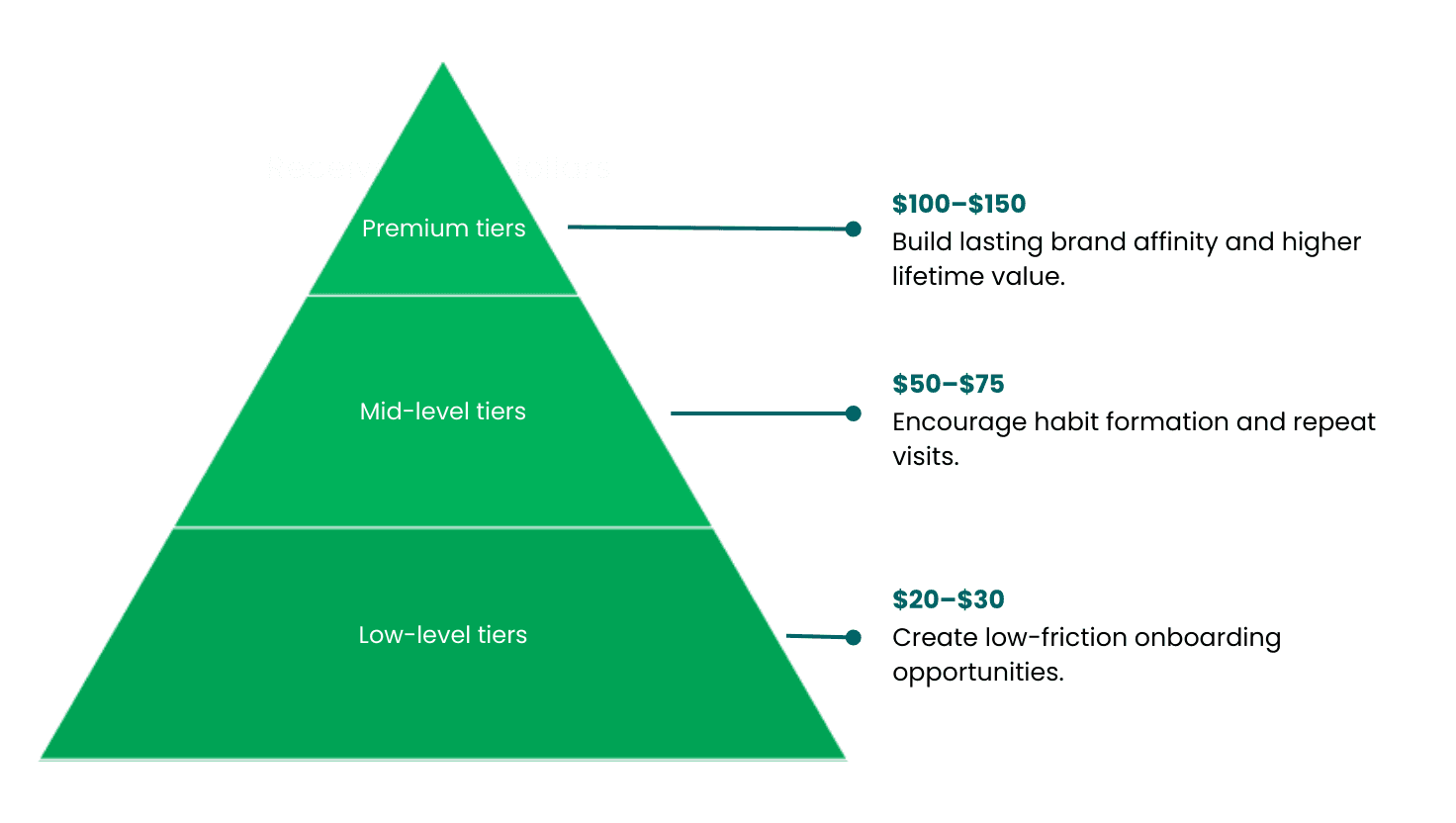
Analysis across thousands of venues shows that tiered rewards outperform flat-rate systems.
Offering multiple Brandollar tiers, such as $20, $50 or $100 packs, provides structured choice. This structure encourages customers to select higher-value options over time, increasing upfront commitment and future return visits.
The most effective programs commonly use five distinct tiers. This balance supports both accessibility and long-term value because:
Lower tiers reduce friction for first-time buyers.
Mid-level tiers encourage repeat visits and habit formation.
Higher tiers strengthen brand loyalty and increase lifetime value.
A tiered structure allows venues to match reward levels to different customer segments while maintaining margin control and measurable performance.
Finding the Sweet Spot: What’s the Right Bonus to Offer?
When configuring Brandollar tiers, a key consideration is the bonus value. If the incentive is too low, participation declines. If it is too high, margin is reduced unnecessarily.
Across thousands of hospitality venues, performance data shows a consistent bonus range that balances customer appeal and profitability.
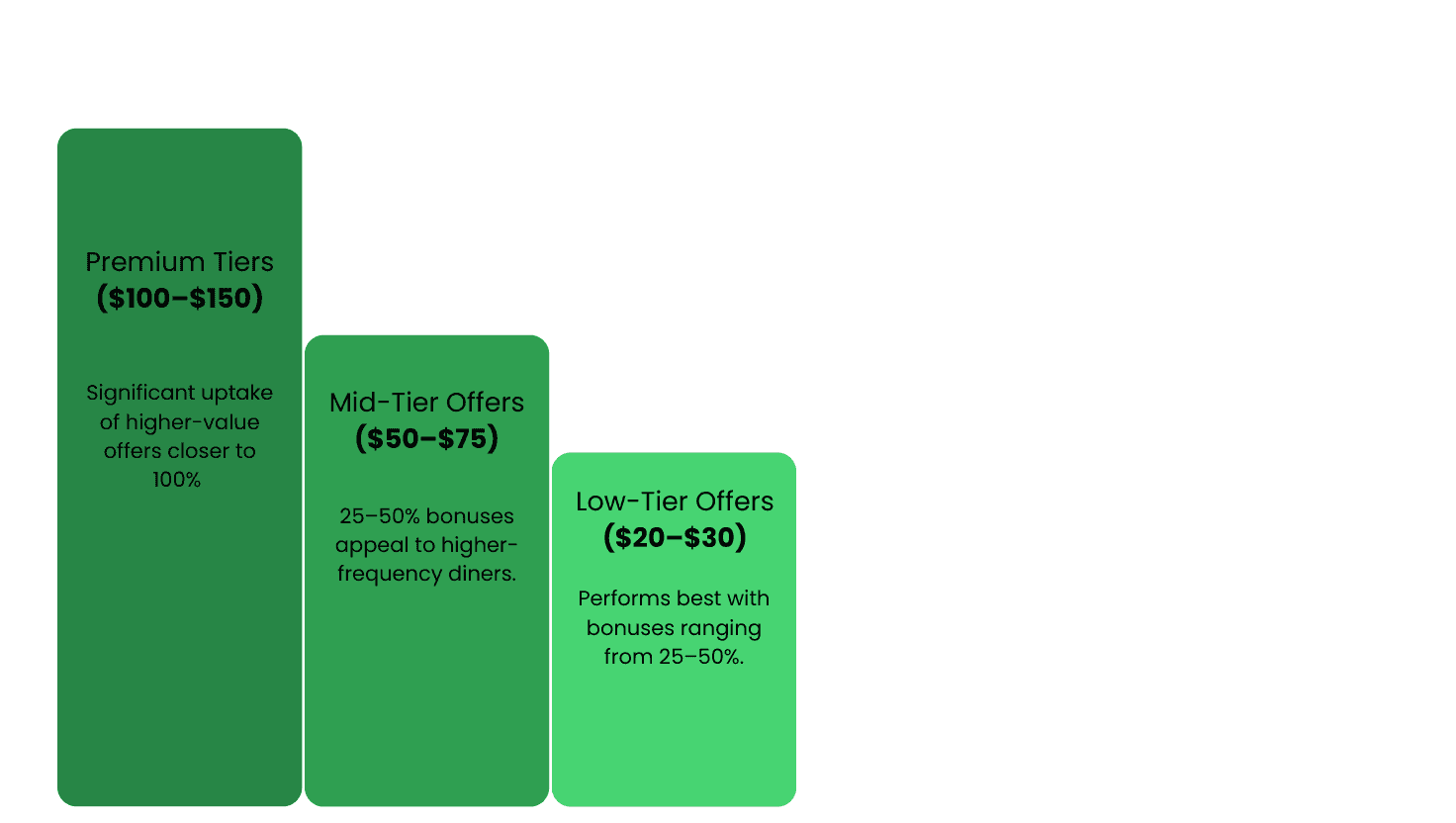
Entry-level tiers, typically between $20 and $30, perform strongly with bonuses in the 25 to 50 per cent range. This creates an accessible entry point for first-time buyers while delivering clear perceived value.
Mid-tier offers, usually between $50 and $75, follow a similar pattern. Bonuses between 25 and 50 per cent remain effective, particularly for frequent diners or group orders.
For premium tiers, often between $100 and $150, moderate bonuses continue to perform well. Higher bonus offers approaching 100 per cent can drive strong uptake but are generally best suited to limited-time promotions or targeted VIP acquisition campaigns.
80% Redemption: Proof that Diners Will Return
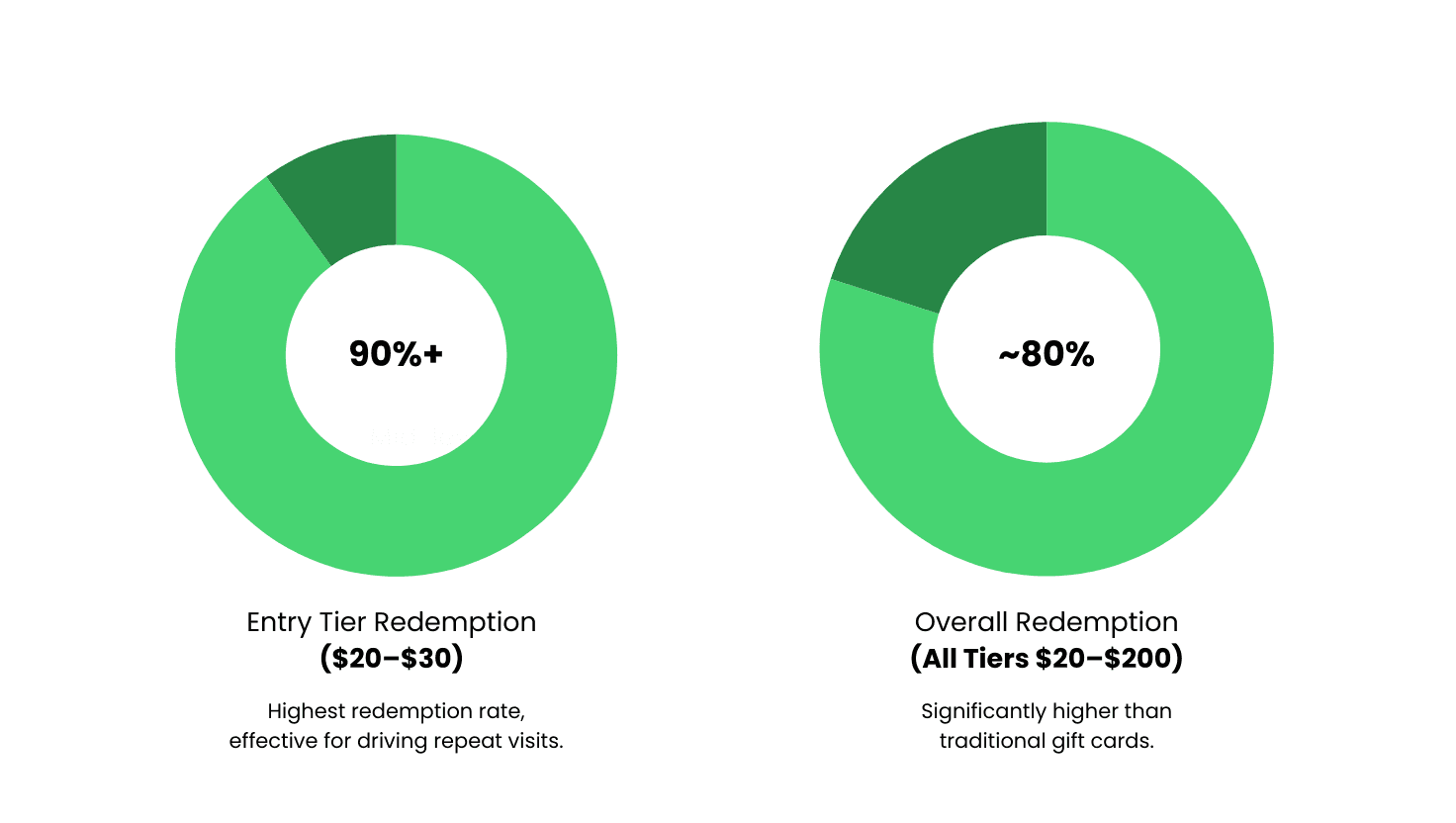
One of the strongest indicators of performance is redemption behaviour. Brandollars consistently achieve redemption rates above 80 percent across all tiers.
Unlike traditional gift cards, which are often partially used or forgotten, Brandollars are typically redeemed in full. Customers return to spend the credit they have purchased.
Lower tiers often record the highest redemption rates, frequently exceeding 90 percent. These entry-level offers are effective for acquiring new customers and establishing repeat visit patterns.
Higher tiers, where customers commit $100 to $150 upfront, also maintain strong redemption rates. Customers purchasing at this level demonstrate clear intent to return and represent high-value segments within the customer base.
Implementing Best Practices for Brandollar Tiers
Considering launching Brandollars? These practical guidelines help optimise performance and protect margin.
Start with Accessible Tiers: Introduce lower-value tiers with a moderate bonus. This reduces friction for first-time buyers and encourages trial.
Make Upgrades Clear: Ensure the value difference between tiers is transparent. Customers should clearly see the incremental benefit of moving to a higher tier.
Set Balanced Bonuses: Bonuses in the 25 to 50 per cent range consistently perform well. They provide meaningful value to customers while remaining commercially sustainable.
Use High Bonuses Strategically: Larger bonuses, such as 75 to 100 per cent, are most effective for targeted campaigns, VIP acquisition or limited-time promotions rather than ongoing offers.
Monitor and Adjust: Track redemption rates, tier uptake, and repeat visit behaviour. Use performance data to refine bonus levels and tier structure over time.
The Future of Rewarding Dining
For restaurants, cafés and hospitality venues seeking to reduce marketing dependency while increasing customer value, tiered branded currency offers a structured approach.
When configured effectively, tiered Brandollar programs drive higher return frequency, increase average spend and support stronger long-term customer value.
This model aligns customer incentives with business outcomes, creating measurable benefits for both guests and venue performance.
Venues face a persistent challenge: converting occasional diners into consistent, high-value regulars. Traditional loyalty programs often fall short. They focus on discounting current purchases or rewarding past behaviour rather than influencing and securing future spending.
Leading operators address this by using branded currency programs that allow guests to bank future dining intent.
Brandollars: Using the Power of Prepaid Loyalty
Unlike conventional loyalty programs that reward past behaviour, branded currency, known as Brandollars, shifts the focus to future commitment and engagement.
Brandollars are venue-specific digital currency that customers purchase and redeem exclusively on your menu. Venues can create purchase tiers such as $20, $50 or $100 and attach a bonus value or percentage to each tier. Customers receive additional credit for purchasing upfront, increasing the likelihood of return visits.
For example, if a customer plans to spend $15 but receives a $5 bonus when purchasing $20 in Brandollars, the added value encourages the higher upfront spend. The bonus credit creates a reason to return and redeem.
"It's not just rewarding spend—it's banking future intent," explains Andy Lark, CRO, Nomni. "When customers invest in your branded currency, they've already committed to coming back."
Why Tiered Rewards Drive Loyalty and Revenue Growth
Analysis across thousands of venues shows that tiered rewards outperform flat-rate systems.
Offering multiple Brandollar tiers, such as $20, $50 or $100 packs, provides structured choice. This structure encourages customers to select higher-value options over time, increasing upfront commitment and future return visits.
The most effective programs commonly use five distinct tiers. This balance supports both accessibility and long-term value because:
Lower tiers reduce friction for first-time buyers.
Mid-level tiers encourage repeat visits and habit formation.
Higher tiers strengthen brand loyalty and increase lifetime value.
A tiered structure allows venues to match reward levels to different customer segments while maintaining margin control and measurable performance.
Finding the Sweet Spot: What’s the Right Bonus to Offer?
When configuring Brandollar tiers, a key consideration is the bonus value. If the incentive is too low, participation declines. If it is too high, margin is reduced unnecessarily.
Across thousands of hospitality venues, performance data shows a consistent bonus range that balances customer appeal and profitability.
Entry-level tiers, typically between $20 and $30, perform strongly with bonuses in the 25 to 50 per cent range. This creates an accessible entry point for first-time buyers while delivering clear perceived value.
Mid-tier offers, usually between $50 and $75, follow a similar pattern. Bonuses between 25 and 50 per cent remain effective, particularly for frequent diners or group orders.
For premium tiers, often between $100 and $150, moderate bonuses continue to perform well. Higher bonus offers approaching 100 per cent can drive strong uptake but are generally best suited to limited-time promotions or targeted VIP acquisition campaigns.
80% Redemption: Proof that Diners Will Return
One of the strongest indicators of performance is redemption behaviour. Brandollars consistently achieve redemption rates above 80 percent across all tiers.
Unlike traditional gift cards, which are often partially used or forgotten, Brandollars are typically redeemed in full. Customers return to spend the credit they have purchased.
Lower tiers often record the highest redemption rates, frequently exceeding 90 percent. These entry-level offers are effective for acquiring new customers and establishing repeat visit patterns.
Higher tiers, where customers commit $100 to $150 upfront, also maintain strong redemption rates. Customers purchasing at this level demonstrate clear intent to return and represent high-value segments within the customer base.
Implementing Best Practices for Brandollar Tiers
Considering launching Brandollars? These practical guidelines help optimise performance and protect margin.
Start with Accessible Tiers: Introduce lower-value tiers with a moderate bonus. This reduces friction for first-time buyers and encourages trial.
Make Upgrades Clear: Ensure the value difference between tiers is transparent. Customers should clearly see the incremental benefit of moving to a higher tier.
Set Balanced Bonuses: Bonuses in the 25 to 50 per cent range consistently perform well. They provide meaningful value to customers while remaining commercially sustainable.
Use High Bonuses Strategically: Larger bonuses, such as 75 to 100 per cent, are most effective for targeted campaigns, VIP acquisition or limited-time promotions rather than ongoing offers.
Monitor and Adjust: Track redemption rates, tier uptake, and repeat visit behaviour. Use performance data to refine bonus levels and tier structure over time.
The Future of Rewarding Dining
For restaurants, cafés and hospitality venues seeking to reduce marketing dependency while increasing customer value, tiered branded currency offers a structured approach.
When configured effectively, tiered Brandollar programs drive higher return frequency, increase average spend and support stronger long-term customer value.
This model aligns customer incentives with business outcomes, creating measurable benefits for both guests and venue performance.
Nomni is the first complete hospitality system that works for you. Loved by over 35,000 venues across Asia Pacific and used by tens of millions of diners and operators annually. To see how Nomni can work for you, visit Nomni.ai
Nomni is the first complete hospitality system that works for you. Loved by over 35,000 venues across Asia Pacific and used by tens of millions of diners and operators annually. To see how Nomni can work for you, visit Nomni.ai
Share this post
Share this post
You might also like
You might also like
You might also like


Browse by category
Browse by category
End not knowing!
Get industry insights, guides, best practices from the best operators, sneak previews of new technology, and more!
End not knowing!
Get industry insights, guides, best practices from the best operators, sneak previews of new technology, and more!
End not knowing!
Get industry insights, guides, best practices from the best operators, sneak previews of new technology, and more!